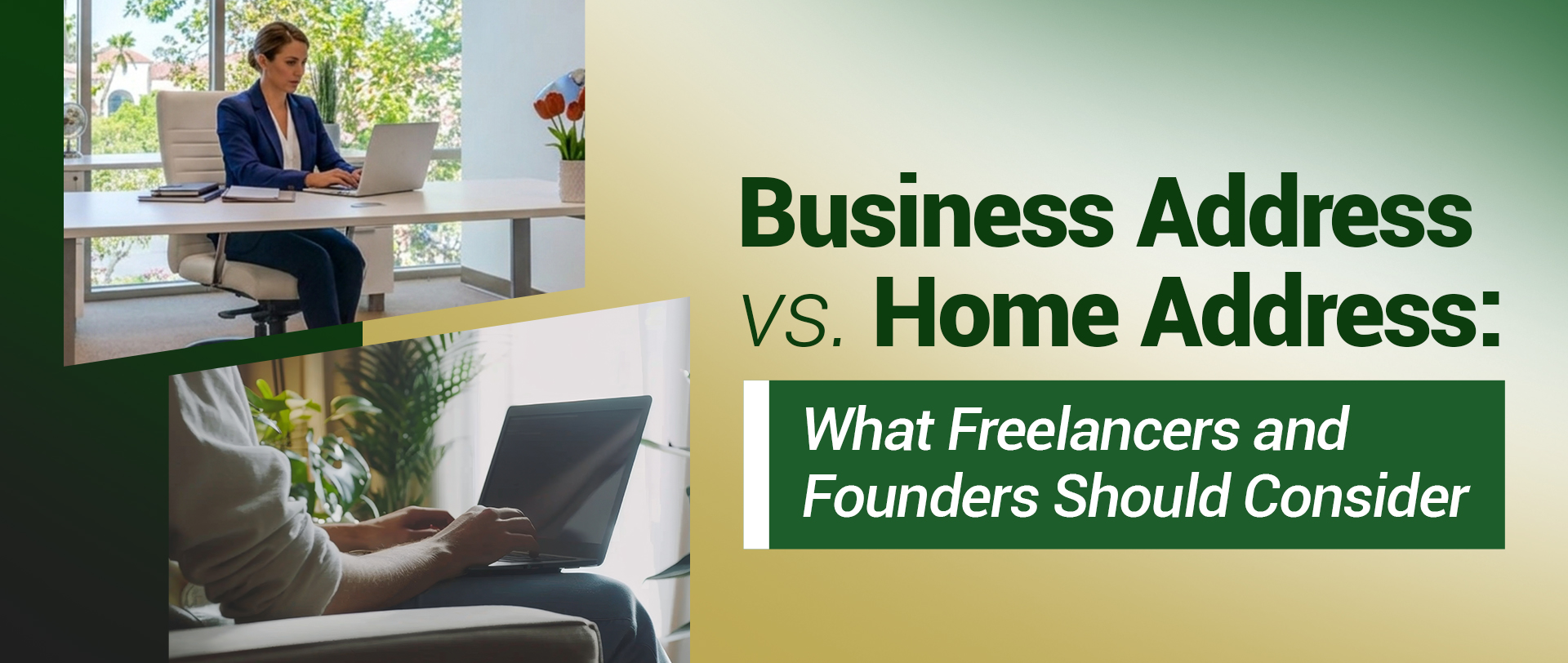
When you start a freelance business or small company, using your home address can feel like the obvious choice. It is free, familiar, and already connected to you.
For some businesses, that works perfectly well for years.
For others, the home address becomes one of the first things they want to change as the business grows. The reasons usually include privacy, mail management, client perception, operational separation, or the desire to create a more professional business presence.
The best decision depends on how the address will actually be used.
Privacy Is the First Question
A home address can appear on invoices, business registrations, public directories, websites, contracts, vendor accounts, and other records depending on your business and local requirements.
If you are comfortable with that, it may not be a problem.
If you prefer to keep your residential address separate from your business identity, a professional business address can create a clearer boundary.
This can be especially important for freelancers or founders who meet the public, work with many clients, or simply value keeping home information private.
Think About How Much Mail You Receive
Some businesses receive almost no physical mail.
Others receive checks, contracts, legal notices, packages, vendor materials, and client correspondence.
A professional mail-handling service can create more structure if business mail is starting to mix with personal mail.
Barrister’s virtual office programs have historically included professional business addresses and mail handling, with mail forwarding and other services available depending on the package.
That allows a home-based business to keep working from home while moving the business identity somewhere more professional.
Client Perception May Matter, but Do Not Overstate It
A business address does not make a business credible by itself.
Clients care about results, communication, expertise, reviews, and trust.
Still, an address can influence first impressions, especially in industries where clients expect a professional business environment.
A consultant using a Beverly Hills or Century City business address may communicate a different presence than a residential street address. A company serving the Valley may prefer Encino, Sherman Oaks, or Woodland Hills. A South Bay business may value Torrance.
The value is contextual.
Choose an address because it makes sense for your business, not because you believe a ZIP code can replace a strong reputation.
Understand Legal and Registration Requirements
A virtual or professional business address is not automatically appropriate for every filing or regulatory purpose.
Different agencies, banks, licensing bodies, and business structures may have specific rules about registered agents, principal business addresses, physical locations, or proof of occupancy.
Always verify the requirements that apply to your company before relying on a virtual address for a particular filing.
A workspace provider can explain the services it offers, but legal and regulatory eligibility should be confirmed with the relevant authority or professional advisor.
Think About Client Meetings Separately
A business address and a meeting location are related, but they are not the same thing.
You may want a professional address even if clients never visit.
Or you may need a meeting room regularly even if you do not care about using the location on your website.
Flexible workplace programs can let you combine those needs. A virtual office may provide the address and mail handling, while meeting rooms or day offices are booked separately when physical space is needed.
That can be a practical structure for remote and home-based businesses.
Consider the Next Stage of the Business
Today you may only need an address.
Six months from now, you may need a meeting room.
A year from now, you may want a private office.
Choosing a provider with multiple workspace options can make that progression easier.
Barrister Workplaces operates 20+ Southern California workplaces across Los Angeles, the Westside, San Fernando Valley, South Bay, Santa Clarita Valley, Ventura County, and San Diego County.
Established markets include Beverly Hills, Brentwood, Burbank, Century City, Encino, LAX, Marina del Rey, Pasadena, Santa Monica, Sherman Oaks, Torrance, Valencia, West Los Angeles, Westlake Village, Woodland Hills, and additional areas.
A business can start with a virtual presence and later explore physical workspace as its needs change.
When a Home Address Still Makes Sense
Keep the home address if privacy is not a concern, the business receives little mail, clients never visit, your local rules allow it, and you have no need for a separate professional identity.
There is no reason to add cost just to imitate a larger company.
Flexibility means paying for what you need.
When a Professional Address May Make Sense
Consider a professional business address if you want to separate home and business, receive mail more professionally, establish a presence in a business district, or create a path toward meeting rooms and private workspace.
The decision should make the business easier to operate.
That is the real standard.
Explore Virtual Workplace Options
Barrister Workplaces offers virtual workplace solutions, meeting rooms, private coworking, and flexible offices across Southern California.
Call 800-576-0744 or email hello@barristerworkplaces.com.